8888888888888888888888888888888888888888888888888888888888888888888888888888888888
Dr. James Madison Nabrit Sr.
Son of [father unknown] and [mother unknown]
Father of James Madison Nabrit Jr. , Margaret E. (Nabrit) Curry , Samuel Milton Nabrit , Gertrude Lurlene (Nabrit) Thomas , Henry Clarke Nabrit , Lois Helene (Nabrit) Clark and Cecelia Antoinette (Nabrit) Adkins
8888888888888888888888888888888888888888888888888888888888888888888888888888888888888888888888888888888888888888888888888888888888888888888888888888888888888888888888
Biography


James was born in 1877.
He was "... a son of former slaves, taught at Central City College, became President of the American Baptist Institute in Nashville, and Secretary of the National Baptist Convention." (Wikipedia entry of his son, James Nabrit Jr.)
He passed away in 1947.
8888888888888888888888888888888888888888888888888888888888888888888888888888888888888888888888888888888888888888888888888888888888888888888888888888888888888888888888
James Madison Nabrit Jr. was a prominent civil rights attorney who won several important arguments before the U.S. Supreme Court, He also served as president of Howard University and was appointed Deputy Ambassador to the United Nations by President Lyndon B. Johnson. [1]
James was born in 1900. He was the son of James Nabrit and Augusta West. He was a President of Howard University. He passed away in 1997.
8888888888888888888888888888888888888888888888888888888888888888888888888888888888888888888888888888888888888888888888888888888888888888888888888888888888888888888888
James Madison Nabrit Jr. (September 7, 1900 – December 27, 1997) was a prominent American civil rights attorney who won several important arguments before the U.S. Supreme Court, served as president of Howard University for much of the 1960s, and was appointed Deputy Ambassador to the United Nations by President Lyndon B. Johnson. His brother, Samuel M. Nabrit, was appointed to the U.S. Atomic Energy Commission. His son, James Nabrit III, was also a civil rights attorney.
Early life and career
James Nabrit Jr. was born in Georgia on September 7, 1900, to James Nabrit Sr., a Baptist minister and baker, and Gertrude Augusta West. Reverend James M. Nabrit Sr., a son of former slaves, taught at Central City College,[1] became President of the American Baptist Institute in Nashville, and Secretary of the National Baptist Convention. Himself a learned college graduate, who taught some of his children Latin, Greek and physics, James M. Nabrit Sr. was the father of eight college graduates, and seven who earned advanced degrees. Nabrit Jr. graduated from Morehouse College in 1923 and from Northwestern University Law School in 1927, when he graduated first in his class[2].
Nabrit Jr. married Norma Walton in 1924—they would remain married until her death in 1988[3]—and taught at colleges in Louisiana and Arkansas from 1927 to 1930.[4] From 1930 to 1936 he practiced law in Houston, Texas.[4] Nabrit began teaching law at Howard University in 1936 and served as dean of Howard's law school from 1958 to 1960 and president of the university from 1960 to 1969.[4][5] In 1938 he started the first formal civil rights law course in the United States.[6]
Civil rights cases
Beginning in the 1940s and through the 1950s, Nabrit handled a number of civil rights cases for the NAACP Legal Defense and Educational Fund, working with prominent attorneys such as Thurgood Marshall, later a Supreme Court justice. Notably, Nabrit argued Bolling v. Sharpe, a companion case of Brown v. Board of Education.[4]
President of Howard and later life
Nabrit served as president of Howard University from 1960 to 1965. From 1965 to 1967 he served as Deputy U.S. Ambassador to the United Nations—the first African American to hold this position.[7] He returned to the presidency of Howard from 1968 to 1969,[5] stepping down under pressure from the American Association of University Professors after he expelled 18 disruptive students. Nabrit said that he had simply been waiting for the university to choose a successor. He died in Washington, D.C., on December 27, 1997, at the age of 97. He was survived by his only son, James Nabrit III.[4]
References
- Oltman, Adele (2008). Sacred Mission, Worldly Ambition: Black Christian Nationalism in the Age of Jim Crow. Athens, Georgia: University of Georgia Press. p. 127. ISBN 978-0-8203-3661-9.
- Law school faculty and administration introduction of James Madison Nabrit Jr. at Northwestern University School of Law School’s (NULS) Black Law Student Association banquet in 1983; https://www.law.northwestern.edu/about/history/
- Norma Walton Nabrit (Obituary) The Washington Post, March 17, 1988
- Eric Pace (December 30, 1997). "James M. Nabrit Jr. Dies at 97; Led Howard University". The New York Times. Retrieved June 9, 2015.
- "JAMES M. NABRIT JR. BIOGRAPHY". Howard University. February 10, 2015. Archived from the original on September 5, 2015. Retrieved June 9, 2015.
- "History". www.law.northwestern.edu. Retrieved August 27, 2018.
- "Nabrit, James Madison Jr.", Civil Rights: An A–Z Reference of the Movement that Changed America (abridged from Encyclopedia Africana), ed. Kwame Anthony Appiah and Henry Louis Gates Jr., Philadelphia: Running Press, 2004, pp. 297–298.
Biographies
- Smalls, F. Romall, Kenneth T. Jackson, (editor). "James Madison Nabrit Jr." In The Scribner Encyclopedia of American Lives, Volume 5. New York: Charles Scribner's Sons/Gale Group 2002: 413-414
- James Nabrit Jr., Civil Rights Lawyer and Former President of Howard. In JET Magazine, Vol. 93, No. 8 (Jan. 19, 1998, page 18)
8888888888888888888888888888888888888888888888888888888888888888888888888888888888888888888888888888888888888888888888888888888888888888888888888888888888888888888888
Black History Makers: The Nabrit Brothers

88888888888888888888888888888888888888888888888888888888888888888888888888888888888888888888888888888888888888888888888888888888888888888888888888888888888888888888888888888888888888888888888888888888888888888888888888888888888888888888888888888888888888888888888888888888888888888888888888888888888888888888888888888888888888888888
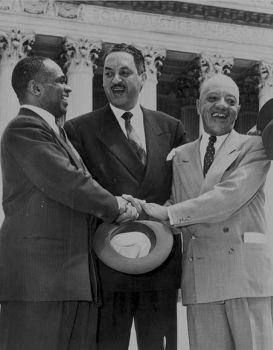
James Madison Nabrit Jr, the son of a Georgia minister, who had witnessed horrific racial violence growing up in the Jim Crow South, joined the faculty of the Howard University Law School at the urging of Charles Hamilton Houston. In his new role on Houston’s team of elite Black legal scholars, the young professor developed and taught the first full course on civil rights law ever offered by an American law school.[1]
Nabrit later picked up the mantle of the District’s school desegregation fight after Houston died in 1950, and he significantly influenced the direction of the national, NAACP-led struggle for school desegregation. He went on to lead the Howard University School of Law and become the university’s president years later.
Professor Nabrit--referred to as “Jim Reds” by some of his students likely because of his reddish hair--dedicated most of his civil rights law curriculum to dissecting and eviscerating the legal arguments of Plessy v. Ferguson, which established the doctrine of “separate but equal.” One of his pupils, Dovey Johnson Roundtree, who matriculated into Howard in 1947, reflected on Nabrit’s class in her memoir:
Line by line, layer by layer, Dr. Nabrit ripped away the veneer of judicial authority that encased the Plessy decision, unmasking for us a truth that remained hidden from our privileged white counterparts at other law schools, where, in the 1940s, Plessy was carefully ignored...Nabrit alone among American law professors had dared to take it on.[2]
Nabrit believed the doctrine outlined in the 1896 case was so flawed that it rose to the level of being “un-Christian” and “un-American.”[2] The Court, he argued, would always fall back on the Plessy doctrine if given the opportunity, forever denying Black Americans true equality. Thus, civil rights lawyers should avoid citing the doctrine when arguing before the Court.
It was this uncompromising belief in the illegitimacy of the Plessy doctrine that led Nabrit to push back on Houston and Thurgood Marshall’s legal strategy of equalization. “We had nothing to lose by an outright assault on segregation,” Nabrit said of the “serious difference of opinion” between him and Thurgood Marshall.[3]
“To invoke Plessy even as a fallback position was in Nabrit’s view to be complicit in the evil, to give credence to the lie, to feed its poison,” Roundtree recalled of her professor’s beliefs, “Though he never raised his voice, Professor Nabrit seemed to thunder as took on the NAACP’s tempered approach.”[2]
Nabrit believed that Marshall personally agreed with him but was concerned with delivering results. “After all, the NAACP got its funds from many people who wanted these cases won, even if on the wrong grounds. Thurgood understood my argument...but he had a constituency out there,” Nabrit argued.[3]
When Gardner Bishop approached the Howard professor in the Spring of 1950 about continuing Houston’s work as counsel, Nabrit agreed with one caveat: they must abandon Houston’s equalization cases and form a new case that attacks segregation head on.
The Most Devastating Forces at Hand
In his first brief for the new case, Bolling v. Sharpe, Nabrit never once mentioned the unequal conditions of Black schools in the District. He laid his entire case upon the inherent injustice of segregation. Instead of trying to prove that the District schools were unequal, he put the burden of proof upon the District officials to find a justifiable reason for why separate systems should exist at all.[1]
Aside from the difference in strategy between Bolling’s desegregation argument and the NAACP’s equalization tact, Nabrit’s case was also unique because it couldn’t rely on the principle of “equal protection of the law” as outlined in the Fourteenth Amendment.
The amendment says, in part, that “No State shall make or enforce any law which shall abridge the privileges or immunities of citizens of the United States.” This landmark civil rights amendment, whether on purpose or through tragic oversight, excluded the citizens, chiefly the Black citizens, of the District of Columbia from equal protection under the law.
Nabrit, instead, relied on the affirmation of the right to liberty written in the fifth amendment, which applies to all citizens regardless of whether they live within a set of borders called a state, as opposed to just a district or territory: No person shall be...deprived of life, liberty, or property, without due process of law.
He cited the Japanese internment cases of WWII, in which the Court set a high bar of threat to national security for temporary deprivations of liberty. Nabrit argued that under this precedent the District school board was treating Black children as criminals, arbitrarily depriving them of liberty.[1]
In April 1951, District Court Judge Walter Bastian ruled against Nabrit’s argument, citing that no claim of unequal conditions had been made and therefore no relief could be provided. This defeat in District Court bolstered Thurgood Marshall’s belief that a more measured approach in the courts was necessary to make incremental progress.[1]
Over the next year, Marshall continued to hedge his argument, and he and his team of NAACP lawyers argued for equalization in school segregation cases in Virginia, Delaware, South Carolina, and Kansas. The latter most of which formed the name that would go down in this chapter of American history books: Brown v. Board of Education.
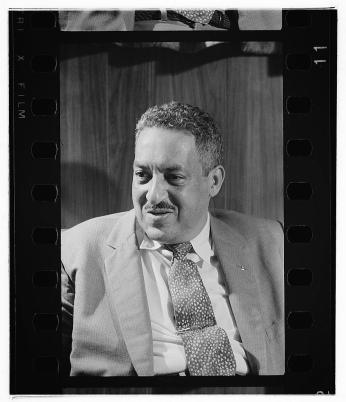
Nabrit, unmovable in his belief of the immorality of Plessy, persisted with his full frontal approach and pressured Marshall to change tact. At an April 1952 conference at Howard, with 300 of the nation’s leading Black scholars and lawyers in attendance, Nabrit was the most outspoken attendee on the need for aggressive action.
Other presenters urged Marshall and the NAACP team to be even more cautious in their approach. John Frank, an advisor to Marshall, compared an all-out attack on segregation to an army abandoning its most important line of defense, “The most daring army guards its lines of retreat. So should a litigation strategist.” Another lawyer suggested that even a national strategy of litigation was too broad and that the NAACP should secure victories in the border areas, instead of the Deep South.[1]
Nabrit railed against these cautious approaches, speaking in unequivocally bold terms:
The attack should be waged with the most devastating forces at hand. Let the Supreme Court take the blame if it dares to say to the entire word, ‘Yes, democracy rests on a legalized caste system. Segregation of the races is legal.’ Let the Court write this across the face of the Constitution: ‘All men are equal, but white men are more equal than others.’[4]
Nabrit’s impassioned speech at the conference pushed Marshall towards a more robust attack on segregation, and, the next month, when he filed a statement of jurisdiction at the Supreme Court for the South Carolina case, Marshall wrote in direct language similar to that which Nabrit had endorsed all along.[1]
“On occasion, the courts have denied that enforced segregation of Negroes in American life is a badge of inferiority, thus closing their eyes as judges to what they must know as men,” the statement read.[1]
As the District group was working on appealing the District Court decision in October 1952, Nabrit received a phone call from a clerk at the Supreme Court. Chief Justice Fred Vinson had asked for the Bolling case to be heard directly by the Supreme Court alongside the NAACP’s cases, bypassing the Court of Appeals.[5]
The Basic Question Here is One of Liberty
In December 1952, Nabrit appeared before the U.S. Supreme Court, with his co-counsel George E.C. Hayes. Hayes was a longtime colleague of Nabrit, joining the Howard law school faculty even before Houston became vice dean.
During Nabrit’s portion of the argument, he once again harkened back to the Japanese-American internment cases:
We ask nothing different than that we be given the same type of protection in peace that these Japanese were given in time of war...We are simply saying that liberty to us is just as precious, and that the same way in which the Court measures out liberty to others, it measures to us.[6]
In his closing argument, as the climax of the legal battle for school integration in the nation’s capital, Nabrit employed the full weight of the definition of liberty itself to support his case:
The basic question here is one of liberty, and under liberty, under the due process clause, you cannot deal with it as you deal with equal protection of laws, because there you deal with it as a quantum of treatment, substantially equal. You either have liberty or you do not...We submit that in this case, in the heart of the nation’s capital, in the capital of democracy, in the capital of the free world, there is no place for a segregated school system. This country cannot afford it, and the Constitution does not permit it, and the statutes of Congress do not authorize it.[7]
After Chief Justice Vinson died unexpectedly of a heart attack in 1953, the new Chief Justice, Earl Warren, asked to rehear the cases, and finally, on May 17, 1954, the Supreme Court was ready to hand down a decision on the five school segregation cases.
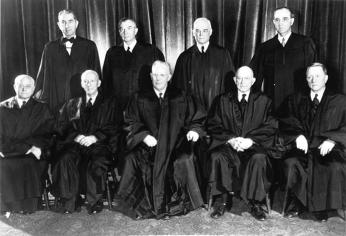
Nabrit invited Roundtree, his pupil who had watched him craft his argument against Plessy and bring his District case to court, to hear the verdict in the Supreme Court chamber on the day of the verdict. Roundtree recalled in her memoir:
There are times when the world, after interminable waiting, changes in a single moment. Monday, May 17, 1954, was one of those times...All the agony that followed in the wake of that historic ruling, including the agony of our present-day struggle to fulfill its promise, has not diminished what the Court did that day.[4]
In his unanimous majority opinion for the Bolling case, Chief Justice Warren agreed with Nabrit that the District had unjustly deprived the children of liberty and due process:
Although the Court has not assumed to define 'liberty' with any great precision, that term is not confined to mere freedom from bodily restraint. Liberty under law extends to the full range of conduct which the individual is free to pursue...Segregation in public education is not reasonably related to any proper governmental objective, and thus it imposes on Negro children of the District of Columbia a burden that constitutes an arbitrary deprivation of their liberty.[8]
Footnotes
- a, b, c, d, e, f, g Kluger, Richard. "The Best Place to Attack" in Simple Justice: The History of Brown v. Board of Education and Black America’s Struggle for Equality. New York: Alfred A. Knopf, 2004.
- a, b, c McCabe, Katie and Roundtree, Dovey Johnson. "The Assault on Plessy v. Ferguson" in Justice Older Than The Law: The Life of Dovey Johnson Roundtree. Jackson: University of Mississippi Press, 2009.
- a, b Kluger, Richard. "On the Natural Inferiority of Bootblacks" in Simple Justice: The History of Brown v. Board of Education and Black America’s Struggle for Equality. New York: Alfred A. Knopf, 2004.
- a, b McCabe, Katie and Roundtree, Dovey Johnson. "Taking on the 'Supreme Court of the Confederacy'" in Justice Older Than The Law: The Life of Dovey Johnson Roundtree. Jackson: University of Mississippi Press, 2009.
- ^ McNeil, Genna Rae. "Community Initiative in the Desegregation of District of Columbia Schools, 1947-1954: A Brief Historical Overview of Consolidated Parent Group, Inc. Activities from Bishop to Bolling," Howard Law Journal 23, no. 1 (1980): 25-42
- ^ Nabrit, James. Bolling v. Sharpe, Oral Arguments. University of Michigan. https://apps.lib.umich.edu/brown-versus-board-education/oral/Hayes&Nabr…
- ^ Nabrit, James. Bolling v. Sharpe, Oral Arguments. University of Michigan. https://apps.lib.umich.edu/brown-versus-board-education/oral/Nabrit&Kor…
- ^ Bolling et. al. v. Sharpe et. al. 347 U.S. 497 [1954]
8888888888888888888888888888888888888888888888888888888888888888888888888888888888888888888888888888888888888888888888888888888888888888888888888888888888888888888888
Samuel Milton Nabrit (1905-2003)

Samuel Milton Nabrit
Fair use image
A marine biologist, academic, and administrator, Samuel Milton Nabrit was born in Macon, Georgia, to James Madison Nabrit and Gertrude West on February 21, 1905. Upon completing his elementary and high school education, he entered Morehouse College in 1921. There he earned the B.S. degree in Biology in May 1925 and spent the summer teaching at his alma mater. His stay at Morehouse was short lived because in September, 1925, he entered the University of Chicago where he pursued a master’s degree. Five years after completing his M.A. in 1927, Nabrit became the first African American to receive a Ph.D. in Biological Sciences when he graduated from Brown University in 1932.
Nabrit spent the next twenty-five years of his life in two administrative posts at Atlanta University, as chair of the Biology Department and dean of the Graduate School. In 1955 he was appointed the second president of Texas Southern University (TSU) in Houston, Texas. Nabrit served TSU for ten years (1955-1966) during the civil rights movement. Nabrit felt particularly close to civil rights activists partly because his brother, noted civil rights lawyer James Nabrit, was one of the three attorneys who successfully argued the Brown v. Board of Education decision before the U.S. Supreme Court in 1954. Years later Samuel Nabrit proudly recalled that during his tenure no students were expelled from Texas Southern University for participation in civil rights demonstrations.
While president of Texas Southern University, Nabrit was appointed a member of President Dwight Eisenhower’s National Science Board (1956). Ten years later President Lyndon B. Johnson appointed him the first black to serve on the Atomic Energy Commission in 1966. Shortly after leaving TSU, Nabrit became the first black member of the board of trustees of Brown University in 1967.
Samuel Nabrit, a member of Sigma Pi Phi fraternity, was married to Constance Croker who preceded him in death. They had no children. Ninety-eight year old Samuel Milton Nabrit died in his home in Atlanta on December 30, 2003.
8888888888888888888888888888888888888888888888888888888888888888888888888888888888888888888888888888888888888888888888888888888888888888888888888888888888888888888888
James Nabrit III, Lawyer born
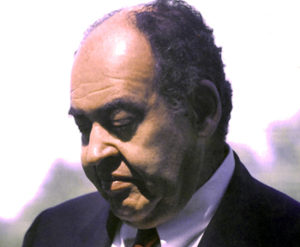
James Nabrit III
*James Nabrit III was born on this date in 1932. He was a Black civil rights attorney and legal activist.
James Madison Nabrit III was born in Houston, Texas, the son of James Nabrit, Jr., a prominent civil rights attorney, law professor, and later President of Howard University. He grew up in Washington, D.C., where he attended segregated public schools for part of his high school education.
He finished high school at the Mount Hermon School for Boys, now Northfield Mount Hermon, in Massachusetts. Nabrit III graduated from Bates College in Lewiston, Maine, in 1952 and Yale Law School in 1955.
Nabrit III began his career with the Reeves, Robinson & Duncan law firm and served two years in the U.S. Army. Following his military service, he spent 30 years (1959–1989) as an attorney with the NAACP Legal Defense and Educational Fund, Inc. He was an ally of Thurgood Marshall, who won several important decisions before the U.S. Supreme Court.
Nabrit III argued many critical civil rights cases before the U.S. Supreme Court and various U.S. Courts of Appeals, including Swann v. Charlotte-Mecklenburg Board of Education in 1972 and Shuttlesworth v. Birmingham in 1969. He argued 12 cases before the Supreme Court and won 9.
James Nabrit III died on March 22, 2013, in a hospital in Bethesda, Maryland, suffering from lung cancer. He was 80.
8888888888888888888888888888888888888888888888888888888888888888888888888888888888888888888888888888888888888888888888888888888888888888888888888888888888888888888888
Rev. Dr. Henry Clarke Nabrit
Son of James Madison Nabrit Sr. and Augusta Gertrude (West) Nabrit
Brother of James Madison Nabrit Jr., Margaret E. (Nabrit) Curry, Samuel Milton Nabrit, Gertrude Lurlene (Nabrit) Thomas, Lois Helene (Nabrit) Clark and Cecelia Antoinette (Nabrit) Adkin
8888888888888888888888888888888888888888888888888888888888888888888888888888888888888888888888888888888888888888888888888888888888888888888888888888888888888888888888
Biography
Henry Clarke Nabrit was a dedicated pastor, civil rights advocate, and publishing director. Born July 11, 1915 in Augusta, Georgia, to Rev. James Madison Nabrit Sr. and Gertrude August West Nabrit, he followed in his father’s footsteps, pursuing a lifelong ministry. A graduate of Morehouse College, he earned advanced degrees in theology and divinity, culminating in a Juris Doctor from Memphis State University. Nabrit pastored churches in West Virginia, Memphis, and Ohio, serving his congregations for over four decades. In 1989, he moved to Nashville to become the director of publications for the Sunday School Publishing Board of the National Baptist Convention U.S.A. until his retirement. An active member of the NAACP and the civil rights movement, he dedicated his life to faith, education, and justice. He passed away June 9, 2003 and was buried at Greenwood Cemetery in Nashville, Tennessee.
8888888888888888888888888888888888888888888888888888888888888888888888888888888888888888888888888888888888888888888888888888888888888888888888888888888888888888888888

88888888888888888888888888888888888888888888888888888888888888888888888888888888888
Look Back, March 3

88888888888888888888888888888888888888888888888888888888888888888888888888888888888
A play by Smith College senior Yolanda Denise King and a dance by Amherst College student R. Lee Nabrit played to sold out houses at Smith College this weekend. The two original works were produced by the Black Theatre Workshop in the Hallie Flanagan Studio Theatre. Both were testimony to the richness of area Black students’ talents.
88888888888888888888888888888888888888888888888888888888888888888888888888888888888
Contact
Family
Personal
88888888888888888888888888888888888888888888888888888888888888888888888888888888888
Professional
88888888888888888888888888888888888888888888888888888888888888888888888888888888888
Amherst
Reunion Class
- 1976
Graduation Year
- 1976
Major(s)
- Psychology
Other Academic
Secondary Schools
- Booker T. Washington High School
88888888888888888888888888888888888888888888888888888888888888888888888888888888888
Amherst
Fraternity
- Independent (no fraternity affil)
Post-Graduate
Publications/ Creative Works
- Look Back, March 3- 50 years ago, "a dance by Amherst College student R. Lee Nabrit played to sold out houses ... produced by the Black Theatre Workshop ..."\\Source: Daily Hampshire Gazette Online - Mar 03, 2026\\https://gazettenet.com/2026/03/03/look-back-march-3/\
8888888888888888888888888888888888888888888888888888888888888888888888888888888888888


No comments:
Post a Comment