8888888888888888888888888888888888888888888888888888888888888888888888888888888888888888888888888888888888888888888888888888888888888888888888888888888888888888888888
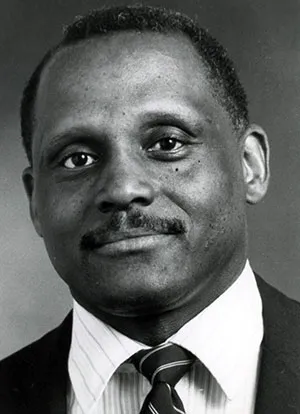
President Valerie Smith shared the following message with the campus community on October 19, 2026:
Dear Friends,
With deep sadness, I write to share the news that Robert Ernest Williams, the Marian Snyder Ware Professor Emeritus of Physical Education and Athletics, died in Virginia on Oct. 2. He was 88.
Bob, who served as athletics director for 16 years, brought a profound understanding and appreciation of the role that physical education and athletics can play in enhancing the mission of liberal arts education, and he devoted his tenure of wise, tireless, and distinguished leadership to achieving that goal.
Bob was predeceased by Thema Williams, his wife of 63 years and a speech pathologist, who died last year. He is survived by sons Robert Jr., Vernon, and Scott; brother Albert Williams II; three grandsons; two great-granddaughters; and a large extended family.
I invite you to read more below about Bob and his many contributions to our community.
Sincerely,
Valerie Smith
President
Roy J. and Linda G. Shanker Presidential Chair
In Honor of Retired Athletics Director, Physical Education Professor Bob Williams
Marian Snyder Ware Professor Emeritus of Physical Education and Athletics Robert Ernest Williams died on Oct. 2 at age 88. With his passing, the College has lost a quiet leader who broadened athletics and physical education at Swarthmore and steered the department through significant transition and growth.
“Bob was a respected colleague,” says Janet Dickerson H’92, former dean of the College and former member of the Board of Managers. “He was modest, genteel, and passionate about Division III sports. He was not eager to seek the spotlight; rather, he took great pride in encouraging and mentoring Swarthmore’s scholar-athletes and creating opportunities for them to be seen and honored.”
“I knew Bob only briefly, but I found him warm and inclusive,” says Acting Director and Chair of Athletics, Physical Education, and Recreation Harleigh Chwastyk, whom Williams hired as head women’s volleyball coach in 2002. “He truly understood and respected the work we do.”
“The most important thing about Bob: He respected the overall philosophy of student-athletes,” says Professor of Physical Education and Head Women’s Lacrosse Coach Karen Borbee. “Academics and athletics, in that order. I learned a great deal from him.”
The older of two boys, Williams was born and raised in Trenton, N.J., where his father worked for a pottery company and his mother worked in domestic service. A proud student of Trenton public schools, he attended Trenton Central High School, where he was a standout athlete in track, swimming, and football. He earned a B.S. in health and physical education at Delaware State College in 1961 and a certification in special education the following year from what is now The College of New Jersey. He then taught physical education at what is now the New Lisbon Developmental Center in Burlington County, N.J., and also taught and coached track for four years at Franklin High School in New Brunswick, N.J.
Next, Williams obtained an M.S. in education from Rutgers University. He ultimately coached cross country and track and field there, taught physical education as an assistant professor, and served as chair of college and community recreation.
In 1974, Williams joined Amherst College, where he served as director of physical education and as a tenured faculty member of physical education and athletics. He also coached men’s and women’s cross country and track for 12 years, and coordinated athletic facilities and summer programs across the college.
In seeking a position at Swarthmore, Williams introduced himself in his characteristically understated yet confident style: “My experience reflects success and continuous growth. I have been fortunate; hard work and long hours have certainly been major factors.”
Williams joined Swarthmore’s faculty as professor and chair of the department of physical education and athletics in 1987. Three years later, he became the first to hold the endowed chair for that position, named for an alumna from the Class of 1938.
At Swarthmore, intercollegiate athletics had been emphasized, often to the detriment of other offerings. When he arrived, he found aging facilities and scarce equipment storage space. Also concerning: Non-varsity student athletes, faculty, and staff members were often forbidden from using the facilities.
Williams expanded the athletics program to encompass recreational, intramural, club, and varsity sports, as well as physical education courses. By working with the Student Budget Committee to bring club sports into his department’s financial fold, he increased student access to facilities, trainers, and insurance coverage. Williams also relaxed restrictions on access to facilities and created a new position to oversee and expand scheduling for their use.
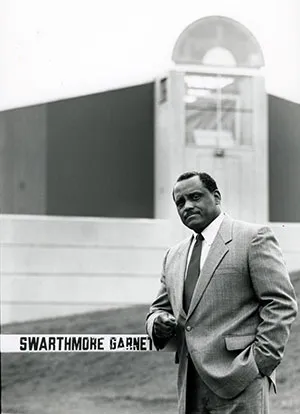
“Bob brought a different approach to how athletics fit into the overall philosophy of college as a whole,” Borbee says. “He saw coaches as educators and sports as the catalyst for education, as opposed to as a means to a win.”
The effect was immediate. Coaches at the time likened Williams’ arrival and his “total program approach” to “a breath of fresh air,” adding that his “positive, excellent leadership” boosted department unity and morale higher than they had been in more than 20 years.
Borbee says Williams saw athletics and physical education as part of, rather than separate from, the College’s educational offerings.
“We are co-curricular,” Borbee says, “but also a piece of students’ educational experience. Because of Bob, my philosophy has been based on that for the last 37 years.”
Meeting students’ needs was a top priority for Williams, and he made the effort it took to connect with them. “They’re a joy and a challenge to work with,” he said. But he was also clear-eyed about the program’s limitations, especially given what it took to support 22 varsity teams.
“I'm worried about the quality of people’s athletic experiences,” Williams said not long after his arrival. “With all the overlap of sports seasons and need for team practice time, I’m concerned that we’re running out of space. It’s a challenge trying to balance everything.”
Still, Williams made improvements. For example, he made sure that budgets for men’s and women’s teams competing in the same sport were equal, well before most schools came into compliance with Title IX. The law, which prohibits sex-based discrimination in education programs and activities, passed in 1972, but its impact took years to reach most campuses.
“There was never a question who was more important at Swarthmore; all coaches and programs were equal,” Borbee says. “Outside of Swarthmore, especially in the 1980s and ’90s, that was not the norm. With Bob, it was. That comes from leadership. Bob was ahead of his time.”
In addition to his director role, Williams served as head men’s track and field coach, with current head coach Pete Carroll as his part-time assistant until Carroll left for a full-time position. In 2000, Williams hired Carroll back, this time as head coach. In a role reversal, Williams then worked as Carroll’s assistant.
“I needed help with jumps, and Bob was good with all the events,” Carroll says. “He had coached national champions and had been a sprinter at Del State. So he helped me with the program on the side for a bunch of years. He was a great guy.”
But Carroll learned more than training theory from Williams. “He was a terrific mentor, very caring about sharing his experiences and knowledge, but never pushy,” Carroll says. “Sometimes the old guard in our conference kind of bully the new guy a little. He was my protector in my early years, treated me as a young professional with respect, and that gave me a lot of confidence. I really appreciated that support and how impactful he was on my career.”
Men’s Lacrosse Coach Pat Gress benefited in a similar way. “Bob was a calm, mentoring presence during my early years at the College,” says Gress, whom Williams hired in 1995. “He offered measured advice, was slow to criticize, and always encouraged me to take a long-range approach to decision-making. I could not have asked for a better athletics director at that stage of my career.”
In 1992, Williams led the effort to move Swarthmore into a Division III sports conference with schools that would more closely share his view that physical education should be integrated into the liberal arts college curriculum. That meant leaving the Mid-Atlantic Conference and helping expand the then football-only Centennial Conference, of which Swarthmore was a founding member, into a conference for all sports.
“Bob was our leader to take us into a conference with schools more like us,” says Professor Emeritus of Physical Education and Sociology Mike Mullan. “That wasn’t easy, but the Centennial Conference was eager to include Swarthmore in its new alignment. That’s an achievement.”
Nationally, Williams served as president of the NCAA Division III Coaching Association, and on several other committees and organizations. He also developed a curriculum to educate track and field coaches as a member of the sport’s national governing body.
As a new provost in 1992, Centennial Professor Emerita of Anthropology and Provost Emerita Jennie Keith says she was least prepared for the Athletics area of the role.
“Bob shared his expertise and experience to patiently orient me to the intricacies of conferences, rankings, competition rules, and more,” she says. “When we traveled with coaches and teams to Centennial Conference events, I enjoyed observing the respect and friendship Bob received from other athletic directors.”
“I was always impressed with how Bob represented our department, in our conference and nationally,” Borbee says. “He had a confident yet quiet way about him, a real presence. You always knew when he was in the room. Not necessarily by what he said or how loud he said it, but when he spoke it was always important.”
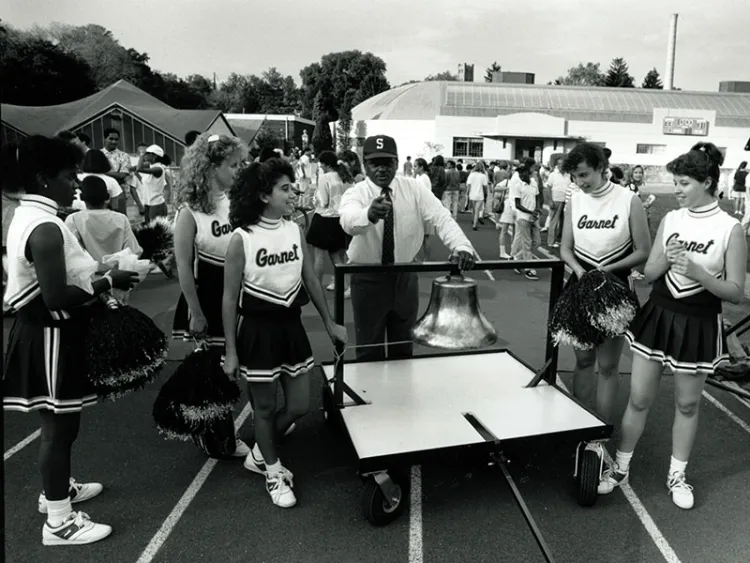
Borbee also credits Williams with being the first person to proactively initiate the shift from part-time to full-time coaches.
“Sports were changing, and being a dual-sport coach was very difficult,” says Borbee, whom Williams hired in 1990 to initially coach women’s basketball and soccer. “Bob helped us start the transition from a department of mostly part-time people to one of mostly full-time people. He felt we needed to grow as a department and was really the catalyst for that process.”
“Coaches do an awful lot of counseling and work on student life issues,” Williams said. “This change will bring the coaches closer to the College and help with their understanding of the overall mission of the school, which will in turn enable them to provide more support for our student-athletes.”
Yet beyond the department, there were competing ideas about how best to provide that support. In 2000, the College made the controversial decision to discontinue the football, wrestling, and varsity badminton programs, citing concerns over resource allocation and alignment with institutional priorities. For Williams, who had served on the ad hoc committee that had reviewed the athletics program, it was a difficult and challenging time.
“I know Bob struggled with it,” Carroll says. “In my opinion, he was the victim, not the bad guy. The players and the president were fighting the battle, and he was stuck in a no-win situation.”
After the decision, Williams acted as an intermediary between players and schools interested in recruiting them. He sent letters and made phone calls to coaches, effectively helping them recruit the players. “Obviously, we want them to stay,” he said, “but if they want to leave, we want to help them in any way possible.”
Williams’ commitment to students did not surprise Vice President and Dean of Admissions Jim Bock ’90. As a student, Bock played on a junior varsity men’s soccer squad that finished its season 9-1-1.
“We had the best record JV ever posted,” says Bock. “I’ll never forget that Bob reached out to congratulate us and gave each of us a varsity letter. Who does that? He was such a warm and compassionate man.”
In 2003, Williams stepped down as athletic director, saying he “felt the time was right.” He also said he had actually considered stepping down earlier, but delayed the decision once football and wrestling ended after the 2000 season.
“I just didn’t think it was right to leave that in someone else’s hands,” he said.
“Through the years, my understanding of the challenges Bob encountered deepened and my appreciation of his principles increased,” Keith says. “Bob daily walked the tightrope of balancing academics and athletics. He was resolute in his commitment to the well-being and especially the safety of his student-athletes. He was also firm in protecting the integrity of Athletics as a College department that included tenured coaches on the faculty.
“Both of these commitments at times placed Bob in the center of controversies,” she adds. “Throughout, he maintained his dedication to students and to balancing athletic and academic engagement in his characteristic calm and steadfast way.”
Williams remained Athletics’ adviser to club sports and maintained his tenured faculty position. The latter allowed him to continue as the faculty athletic representative to athletic conferences such as the NCAA and ECAC. He quietly retired completely from Swarthmore in 2010.
Reflecting on his time at Swarthmore, Williams said his highlights included “seeing our student-athletes being successful with handling the rigors of academics here and doing an excellent job,” as well as “being a witness to how they’ve always displayed excellent sportsmanship.” He said he was also proud of “putting together one of the best coaching staffs in the country.”
“He was classy to the end,” Borbee says. “He left no bridges burned or ever said anything negative about the College. I give him a lot of credit for that.”
Beyond all the matches and games, Williams never lost sight of the big picture.
“Bob was such a family man, and he cared about our families and all of us,” Borbee says. “I’m thinking of our holiday parties and the coaches he mentored and their families. When my daughter was born, he was one of the first to come to the hospital.”
Borbee has also never forgotten the advice he offered while handling logistical challenges.
“Vans were breaking down, we were trying to get everyone home. He said, ‘Do what you would do for your family. Treat your team like family.’ That always stuck with me.”
Ultimately, as The Phoenix concluded when Williams stepped down as AD, student-athletes at Swarthmore were “much better funded, equipped, coached, and transported” than they were prior to his arrival.
“I always wonder what Bob would think of how we operate now,” Borbee says. “I think he’d be pretty proud.”
8888888888888888888888888888888888888888888888888888888888888888888888888888888888888888888888888888888888888888888888888888888888888888888888888888888888888888888888


Robert E. Williams Sr.
February 1, 1938 – October 2, 2026
Robert E. Williams, Sr., was born on February 1, 1938 and passed away on Friday, October 2, 2026. He was the son of the late Nettie Mae Pratt and Albert Williams, Sr. “Bobby,” as he was affectionately called by family members, friends, and co‑workers, leaves behind a legacy defined by devotion to family, education, athletics, and the development of young people. He was born and raised in Trenton, New Jersey. He was a proud student of the Trenton public school system and graduated from Trenton Central High School in 1957. While in high school, he competed in football, swimming, and track as an exceptional standout. He graduated with the discipline and drive that would guide his future. A lifelong educator, coach, and collegiate athletics leader, Robert’s career spanned New Jersey, Massachusetts, and Pennsylvania.
Bobby continued his education at Delaware State College, where he was awarded a Bachelor of Science degree in Health and Physical Education. After college he worked at New Lisbon State Colony for the mentally challenged. Shortly thereafter he worked in physical education and coaching at Franklin High School in New Brunswick, NJ. He later received his master’s degree from Rutgers University.
In 1974, Robert accepted a pivotal role at Amherst College, serving as Director of Physical Education and coaching men’s and women’s cross‑country and track for twelve years. His leadership shaped generations of student‑athletes and helped coordinate athletic facilities and summer programs across the College.
His career took its final major turn when he was selected as Athletic Director at Swarthmore College. Recommended by former athlete and Olympian Troy Engle and drawn by the shared academic‑athletic culture between Amherst and Swarthmore, he embraced the opportunity to strengthen programs, improve facilities, and redefine excellence in athletics at a premier liberal arts institution. His thoughtful, principled leadership earned the respect of faculty, students, and colleagues alike.
Bobby was an avid fisherman and spent many days on the waters of the Delaware Bay on his boat with family. He loved photography and he was also a lifelong dog lover, rarely seen without a loyal companion at his side.
Robert shared more than 60 years of marriage with his beloved wife, Thema Williams, who preceded him in death. Their partnership was one of deep loyalty, mutual support, and enduring love.
Robert is survived by his three sons, Robert, Jr., Vernon, and Scott; his brother, Albert Williams, II. He is also survived by three grandchildren, Justin, Jarrett, and Jayden; two great‑grandchildren, MacKenzie Leilani and Keilani Mae; and his nephew, Albert Williams, IV. He leaves behind a wide and loving extended family, including Colette Williams, along with many other nephews, nieces, cousins, and relatives whose lives were touched by his guidance, his mentorship, and his steady presence. He is remembered with love by all who were shaped by the example he set.
He will be deeply missed.


