8888888888888888888888888888888888888888888888888888888
George R. Johnson Jr.
8888888888888888888888888888888888888888888888888888888
1951 - 2020

8888888888888888888888888888888888888888888888888888888
George Johnson Obituary
George Robert Johnson, Jr. was born in Columbus, GA, on February 25, 1951, to the late Jimmie Lee Hunt Johnson and the late George R. Johnson, Sr. He departed this life on November 15, 2020, after a courageous battle with lung cancer.
He attended the public schools of Columbus, graduating from Carver High School in 1969 as class valedictorian.
George left Columbus in the fall of 1969 for Amherst College, graduating in 1973 with a bachelor of arts in American studies. While at Amherst, he played an active role in the Afro American Society, was vice chair of The Amherst Student, the college newspaper, and was class speaker at graduation. After Amherst, George matriculated at Columbia Law School, earning his juris doctorate in 1976.
Johnson started his legal career as assistant counsel for the U.S. House of Representatives Committee on Banking, Finance and Urban Affairs. The Carter administration welcomed him to the Executive Office of the President in 1979 as assistant general counsel for the White House Council on Wage and Price Stability.
His teaching career began in 1981 as a faculty member at George Mason University School of Law. In 1988, he joined Howard University School of Law as a visiting professor. He went on to become the associate dean for academic affairs in 1992. George served from 1996 to 2002 as president of LeMoyne-Owen College in Memphis, Tennessee. He then entered private practice in 2003 at Saint Louis & Johnson law firm in Washington, D.C.
George joined the founding faculty of Elon University School of Law in 2006. He then served as the school's first associate dean of academic affairs. In 2009, he was named dean of the law school. It was under George's leadership that the law school received full accreditation from the American Bar Association. He remained dean until his decision to return to the faculty ranks in 2014.
Earlier this year, George was named as one of five 2020 Legal Legends of Color, a recognition bestowed by the North Carolina Bar Association's Minorities in the Profession Committee. He was board chair of the National Center for Community and Justice (NCCJ) Greensboro, a member of the board of Triad Stage, as well as Greensboro College, and his alma mater, Amherst College. He was also a member of Alpha Phi Alpha fraternity, and Beta Epsilon Boule of Sigma Pi Phi. A devout Christian, George chaired the Deacon Board at Shiloh Baptist Church (Washington, D.C.), and served on the Board of Trustees. He was also a member of the Deacon Board at Providence Baptist Church, in addition to several other service positions throughout his life.
He leaves behind to cherish his memory his wife, Linda; their son, William (Kerry), and two grandchildren, Nina and Theodore. They mourn his passing alongside three sisters, Brenda Powers of Decatur, GA, Barbara Ann Johnson of Columbus, GA and Carolyn Edmonds of Atlanta, GA; one brother, Michael Johnson of Columbus, GA, and a host of other relatives and friends.
Private funeral arrangements coordinated by Perry J. Brown Funeral Home of Greensboro, NC. In lieu of flowers, please make donations to either Amherst College or the Wake Forest Baptist Cancer Center Discovery Fund in George's memory.
888888888888888888888888888888888888888888888888888888888888888888888888888888888888888888888888888888888888888888888888888888888888888888888888888888888888888888888
In Memory
George Johnson passed away in Greensboro, N.C., on Nov. 15, 2020, after a long illness.
After graduating from Amherst, George had a long and distinguished career as a lawyer, teacher, trustee of Amherst College, president of LeMoyne-Owen College and dean of Elon University School of Law. Richard Ammons ’74 and Cullen Murphy ’74 have written an extraordinary tribute to George, chronicling his life and many accomplishments. This piece, called “A Tribute to George R. Johnson Jr. ’73, P’03,” can be found on the College’s website.
Here, we are sharing memories of George as a classmate, mentor and friend.
When George arrived at Amherst from Columbus, Ga., he was one of 24 Black freshmen, by far the College’s largest class of Black students. A similar number of Black students was admitted in following classes. For some, Amherst was a very foreign world. But George quickly distinguished himself with eloquence beyond his age. He was a mentor for many, sharing not only his warmth and wisdom, but also his scotch and a place at the bid whist table. No one forgot his kindness. Some became his friends for life. We all learned from him.
George’s connections with the Amherst student body, staff and teachers were not limited by race, politics or anything else. George built strong relationships throughout campus. He found a home at The Amherst Student, where he created lasting bonds with students who shared his passion for fine writing and critical thinking.
George connected with faculty and staff. He admired scholarship. He enjoyed reenacting Professor Kateb’s lectures, complete with gestures and moral anguish. He built strong relationships with staff, especially those willing to share inside information. George was always well-informed.
While we are sad to announce George’s passing, we are grateful that he was part of our lives. George’s connection with Amherst will continue through his son William ’03, a source of great pride.
Paul Murphy ’73 and Stephen Keith ’73
8888888888888888888888888888888888888888888888888888888
A Tribute to George R. Johnson Jr. ’73, P’03
8888888888888888888888888888888888888888888888888888888
8888888888888888888888888888888888888888888888888888888
88888888888888888888888888888888888888888888888888888888888888888888888888888888888888888888888888888888888888
“Lawyers are the guardians of our democratic society, our way of life,” said George R. Johnson ’73 in an interview last year with his hometown newspaper, the Greensboro [North Carolina] News & Record. “They protect our rights and civil liberties, which enable us all potentially to achieve our highest aspirations and become our best selves, individually and as a society.”
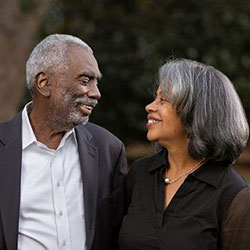
Johnson, who passed away in Greensboro on November 15, after a long illness, was a lawyer, a law school dean, a teacher, a college president, an Amherst College trustee, and an inspiration to generations of students from Georgia to Massachusetts and most places in between. Those who knew him will remember his laugh, which typically began as a low, biblical rumble. His natural eloquence was shaped by the South, the pulpit, and the bar. He was known as “the judge” even as a boy. At Amherst, he may have been the only undergraduate in history who did not look preposterous smoking a pipe.
Johnson was born in Columbus, Georgia, in 1951, the son of Jimmie Lee Hunt Johnson and the late George R. Johnson, Sr., who served in the U.S. Air Force. He attended public schools in Columbus, graduating from Carver High School in 1969 as class valedictorian. It was at Carver that he met the love of his life, the former Linda Jane Morris, herself the valedictorian for the class of 1970. Horace Porter ’72, a friend of Johnson’s in Columbus and a year ahead of him at Amherst, remembers listening to a 15-year-old Johnson speak in church. He also remembers a word he heard for the first time from that 15-year-old’s lips: “vicissitudes.”
In 1969, Johnson left for Amherst College. The connection with Amherst was fortuitous, as it has been for so many of its students. During the summer before his senior year in high school, Johnson had attended a math camp at Knoxville College, in Tennessee—run by the Presbyterian Church and the Rockefeller Foundation, and attended mainly by Black students. The man who ran the program was Frederick A. Parker, Amherst class of 1920.
Johnson graduated in 1973 with a degree in American Studies. As a student, he wore his knowledge lightly, though references to Felix Frankfurter or Charles Hamilton Houston were as much a part of his repertoire as Friday afternoon cocktails. While at Amherst, he played an active role in the Afro-American Society, was vice-chair of The Amherst Student, and was tapped as class speaker at graduation. (During the graduation ceremony, Frederick A. Parker received an honorary degree.) It was a time of protests on campuses nationwide—and at Amherst—against war and racism, and Johnson was involved, eloquently, in both. He told his class:
The College motto when translated from the Latin reads “light the land.” Black students here felt that we who had lived in night and waited long in darkness had some special words of light to contribute to the “Amherst experience.” It was not for us alone that we protested; it was for all of us. It was not for us alone that Black Studies was created, as it was not for the English alone that Shakespeare wrote his plays, nor for the Irish alone that Yeats penned his poetry. It was for all of us.
Johnson married Linda Morris in 1975; a graduate of Tuskegee, she went on to earn an M.D. at the University of Buffalo. Johnson matriculated at Columbia University Law School, earning his law degree in 1976. He started his legal career as assistant counsel for the U.S. House of Representatives Committee on Banking, Finance and Urban Affairs. The Carter Administration welcomed him to the Executive Office of the President in 1979 as assistant general counsel for the White House Council on Wage and Price Stability.
Johnson’s teaching career began in 1981 as a faculty member at George Mason University School of Law. In 1988, he joined Howard University Law School as a visiting professor. He went on to become the associate dean for academic affairs. Johnson served from 1996 to 2002 as president of LeMoyne-Owen College, a historically black institution in Memphis. In 2006, after several years of private practice in Washington, Johnson joined the founding faculty of Elon University School of Law, in North Carolina. He served as the school’s first associate dean of academic affairs, and in 2009 was named dean of the school. Under Johnson’s leadership, Elon received full accreditation from the American Bar Association, an achievement that Johnson regarded as among his proudest. He remained dean until his decision to return to the faculty ranks in 2014.
Johnson was an “institutionalist”—perhaps the word you might have heard once he was done with “vicissitudes.” He harbored no illusions about the perfectibility either of people or the institutions they create, but believed that institutions—slowly and continually improved—were the best way to preserve and advance human and social potential.
Distrust of institutions—of every kind—today runs deep. Johnson’s life is a powerful testament to his belief in their necessity: in law, education, religion, commerce, everywhere. He devoted to his life to institutions. In 1996, he was elected by Amherst alumni to a six-year term as a member of the College’s board of trustees. Earlier this year, Johnson was named as one of five 2020 Legal Legends of Color, a recognition bestowed by the North Carolina Bar. Over the decades, Johnson has served on many boards: the National Center for Community and Justice, in Greensboro; the Council of Independent Colleges; the Amistad Research Center; the Economic Club of Memphis; Universal Life Insurance Company; Autozone Inc.; the Memphis Arts Council; WKNO Public Broadcasting; the Memphis Zoological Society; the Memphis Redbirds Foundation; Soulsville USA, the parent organization of the STAX Museum and Academy; Alpha Phi Alpha Fraternity; the Beta Epsilon Boule Foundation of Sigma Pi Phi; Triad Stage; and Greensboro College. A devout Christian, George chaired the deacon board at Shiloh Baptist Church, in Washington, D.C., and served on its board of trustees. He was also a member of the deacon board at Providence Baptist Church, in Greensboro.
The institution of the family stands above others. George Johnson leaves behind his wife, Linda; their son, William Robert Johnson (Amherst ’03), and his wife Kerry; and two grandchildren, Nina and Theodore. Johnson is also survived by three sisters and a brother, all in Georgia.
And then there is his extended Amherst family, which is not confined by narrow boundaries of generation. George Johnson never let go of anyone, nor did anyone ever lose affection for him. As news of his death began to spread, memories filled phone conversations and email threads. Over a period of four decades, Johnson had been a mentor to countless Amherst students—young people, just starting out on their lives, and seized by the questions he asked in his graduation speech in 1973: “Is it right? Is it fair? Is it just?”
Here is a sampling of comments from a Black alumni listserv, sometimes compressed for concision:
From Charlton Copeland’96: “I met George Johnson when I was an Amherst student in the 90’s and he’d come back to campus. He was among the most generous people, both then and after—a great mentor to younger law teachers.”
From Jack Pannell ’80: “While he was a man of many accomplishments, he was always kind, generous, and humble. George loved Amherst. We shared this love and yet understood the ‘kinks in the armor.’ He inspired me to not be afraid of the big challenges in life; we were built to them.”
And from John Williams’75, a fellow member of the board of trustees: “This is a sad day for the entire Amherst College community. George was simply a giant. His counsel was always among the wisest and soundest in the room. He was a great friend to me and to so many.”
88888888888888888888888888888888888888888888888888888888888888888888888888888888888888888888888888888888888888
Special Feature: The Prize of the High Calling
8888888888888888888888888888888888888888888888888888888
“Is it right? Is it fair? Is it just? Liberal arts education is but a perversion if those questions are excluded from our discourse,” said graduating senior George R. Johnson Jr. ’73, P’03 on the Commencement stage in 1973. That year, Amherst magazine published his address, which centered on antiwar and racial-justice movements during his time at Amherst. We post it now in his memory: Johnson, an eminent lawyer and law professor (and an Amherst trustee emeritus), died on Nov. 15.
Related Reading: A Tribute to George R. Johnson by Richard A. Ammon ’74 and Cullen Murphy ’74
8888888888888888888888888888888888888888888888888888888
1973 Commencement Address by George R. Johnson Jr. ’73, P’03
88888888888888888888888888888888888888888888888888888888888888888888888888888888888888888888888888888888888888
We who came through American colleges and universities during the late sixties and early seventies have survived a difficult period. We have come through a troubled time. The history of our undergraduate years has been one of trouble, of unrest, of desperation, of uncertainty. It has been one of protest, of war, of rebellion. It has been a history of militance, of resistance, of individual assertiveness. Those years—one might well call them an era—had a character all their own. And we, as products of those years, of that era, have been shaped by that character. Furthermore, as products of those years, we have been much maligned, much criticized, much vilified.
Above all others, one thing stands out in my mind as the defining characteristic of the last four or five years, and that is the search, the quest for an individual or group identity, a search which seems to have engaged so much of our time. Indeed, many of us here have made a very conscious effort to discover our true selves, unabetted by the propaganda and myths so long described to us as virtues. We have tried, in the words of the now familiar Long Range Planning Committee Report, “to free ourselves from the conspiracies of society.” In other words, we have tried to make of ourselves what liberal arts education has always promised but always delivered insufficiently. And our troubles, for the most part, have arisen in that effort, in trying to make liberal arts education conform to its promise.
One cannot talk about the last few years without mention of the Indochina War or the heightened political consciousness achieved by various minority groups in this country, particularly the Black minority. Indeed, one could write volumes on either of them and not exhaust a discussion of the social consequences to which these two phenomena have given rise. I choose these two occurrences because it seems to me that it is in them that we can see most clearly that search for identity.
We entered college at a time when both the war and minority protests dominated the news. These were the causes to which we rallied. To be sure, not all of us championed each of these causes, but, I venture to assert, we all devoted some of our energy and much of our sympathy to at least one of them. It was supremely difficult not to have done so. At any rate, whether we devoted energy or sympathy to either of these causes, each of us who leaves here today has been affected—in part, shaped—by these occurrences. They have been as much our teachers as some of the professors and books we leave behind us. Doubtless, for many of us, they have taught more.
The war was a special issue for us, if for no other reason than it was our generation that was drafted to wage it. It was guys like us, neither much older nor much younger, who were sent off to defend what many of us thought to be an indefensible cause. So we were determined to see it ended, at least as far as our manning it was concerned. So we marched on Washington, on Boston, on New York. So we sat in at Westover. It was our bodies that the war machine craved, so it was with our bodies that we symbolized our discontent, our disgust, our anger. It was with our bodies that we sought “to speak truth to power,” since power had long since refused to heed our words.
At Amherst we were fortunate because we did not suffer the tragic bloodshed which deadened the protests at Kent State and Jackson State in 1970. But there were those among us who criticized our tactics. There were those among us who did, and do still, caution us about raising every issue to the level of a moral issue, as if moral issues have no place within a liberal arts environment. If we as students ostensibly in the liberal arts tradition do not ask the “moral” questions, few others, if any, in our society will ask them. We must always be ready to ask the simple but important humanitarian questions: Is it right? Is it fair? Is it just? Liberal arts education is but a perversion if those questions are excluded from our discourse. We gave moral questions a value, an importance and, in the process, we forced the academy and the nation to question the purity of their silence, their acquiescence.
That, I think, has been one of our greatest contributions to Amherst and its liberal arts tradition. If we should feel proud in the accomplishment, it is a well-deserved and legitimate pride. It should be so. To make human beings more concerned, more feeling, more caring, in short—more humane, has always been a noble accomplishment. It should not be otherwise.
In terms of the search for identity, our consistent refusal to give consent to the war has had, or should have had, one important effect. We have signaled to the powers-that-be that we do not intend to accept without question any and every crusade which the government may decide to launch. There were times when it seemed that we were the only people who had not draped the state in some divine surplice. Perhaps there were others, but there were none so vocal nor so visible as we, none so intent on calling attention to what had developed into one of the most monstrous slaughters in civilized history. Of course, we made some errors in our fervent attacks on the war, but they could not compare with the errors of the war itself or the mistaken zeal which led to its perpetration.
The Cambodian incursion, the Haiphong minings—those were the events which eclipsed much of our time at Amherst. After each incident, we responded: to the first, because it seemed a senseless widening of a war already too long and protracted; to the second because the existence of the world as we know it seemed threatened by the fiat of one man who obviously saw the globe as a field upon which to act out his private fantasies. Some have not yet forgiven us for our persistence, for neglecting our studies, as they euphemized it. But we did what we had to do. We would have betrayed the liberal arts ideal had we chosen to sit mute. Liberal arts education, an enterprise whose major concern is, or should be, the improvement of human beings and the human condition, would have been made a mockery had we chosen to remain silent.
The war taught us something. It taught us that there do exist in the world evils monstrous enough, or potentially so, about which we cannot speak in detached terms. It taught us there are some things about which we cannot speak without raising our voices and that, in some instances, raising our voices may mean other than speaking loudly: at times it can mean—indeed, at times, it must mean—taking a decisive step, making a decisive move. Many of us took that step, many of us made that move in relation to the war. I don’t regret it. I don’t think that any of you should.
The other important occurrence which dominated much of our time and which also illustrates our quest or a new identity was the increased number of Black students enrolled in colleges throughout the country. Amherst was no exception. Amherst felt the impact of an “alien” group as did other colleges in America. The traditional liberal arts program alone did not seem adequate to meet the educational needs of Black students. In 1970, the College was served notice that something more—the word has overworked so I use it timidly—“relevant” was needed. The 1970 occupation of various campus buildings, the subsequent creation of a Black Studies Department, the Black Cultural Symposium of the same year, the Day of Concern last year, the All New England Black Students’ Conference this year were all attempts to formulate for inclusion into the liberal arts curriculum of Amherst a new, broader base of knowledge and study which spoke to the needs and experiences of Amherst’s broader population. The College motto when translated from the Latin reads “light the land.” Black students here felt that we who had lived in night and waited long in darkness had some special words of light to contribute to the “Amherst experience.” It was not for us alone that we protested; it was for all of us. It was not for us alone that Black Studies was created, as it was not for the English alone that Shakespeare wrote his plays, nor for the Irish alone that Yeats penned his poetry. It was for all of us. We thought it our calling, our vocation to direct the academy’s attention to a neglected culture within its own. So we did. As yet we have not reached in Black Studies the pinnacle where we want finally to rest. But we have started, and we can take pride in knowing that we were partners in the conception.
Many may try to deny the importance of what has taken place at Amherst over the last few years. One hopes that that is only because of its novelty, its newness. The growing pains have yet to subside. Indeed, it is growth that the College has experienced as a result of these two social phenomena which I have tried to explain. And it is growth also, I hope, that we as products of this College, with its new concerns, have undergone. Otherwise, all our time has been wasted and all our efforts here have been futile.
So there we are. I have tried briefly to tell you about two of the things which have given my days here some meaning, some promise, some joy, some pain even. I do not want to claim that these things are the only important ones to have taken place at Amherst since 1969. Nor do I want to claim that you, my colleagues, have been affected by them in the same ways as I have. However, I would be disturbed if they have not affected each of you in some way, if only negatively.
So we leave each other today, my friends. We leave the teachers we have known to meet new and different teachers. We leave this library we have known for a vaster, more comprehensive library equipped, at certain times and in certain places, with more than books. We leave our old friends to make new friends in new places. We leave this clean, well-lighted place for some other place, perhaps not so clean nor so well-lighted. We leave this country for another country. I would that we might leave as did the apostle Paul when he wrote: “I press toward the mark for the prize of the high calling….”
Has the way to the high calling been taught us here? Perhaps not. But my wish, my most fervent hope, is that all our time and all our efforts here have taught us how to discover that way for ourselves.
888888888888888888888888888888888888888888888888888888888888888888888888888888888888888888888888888888888888888888888888888888888888888888888888888888888888888888888

No comments:
Post a Comment